Sweden
Northern lights in Abisko: dark at the door, less clear than claimed
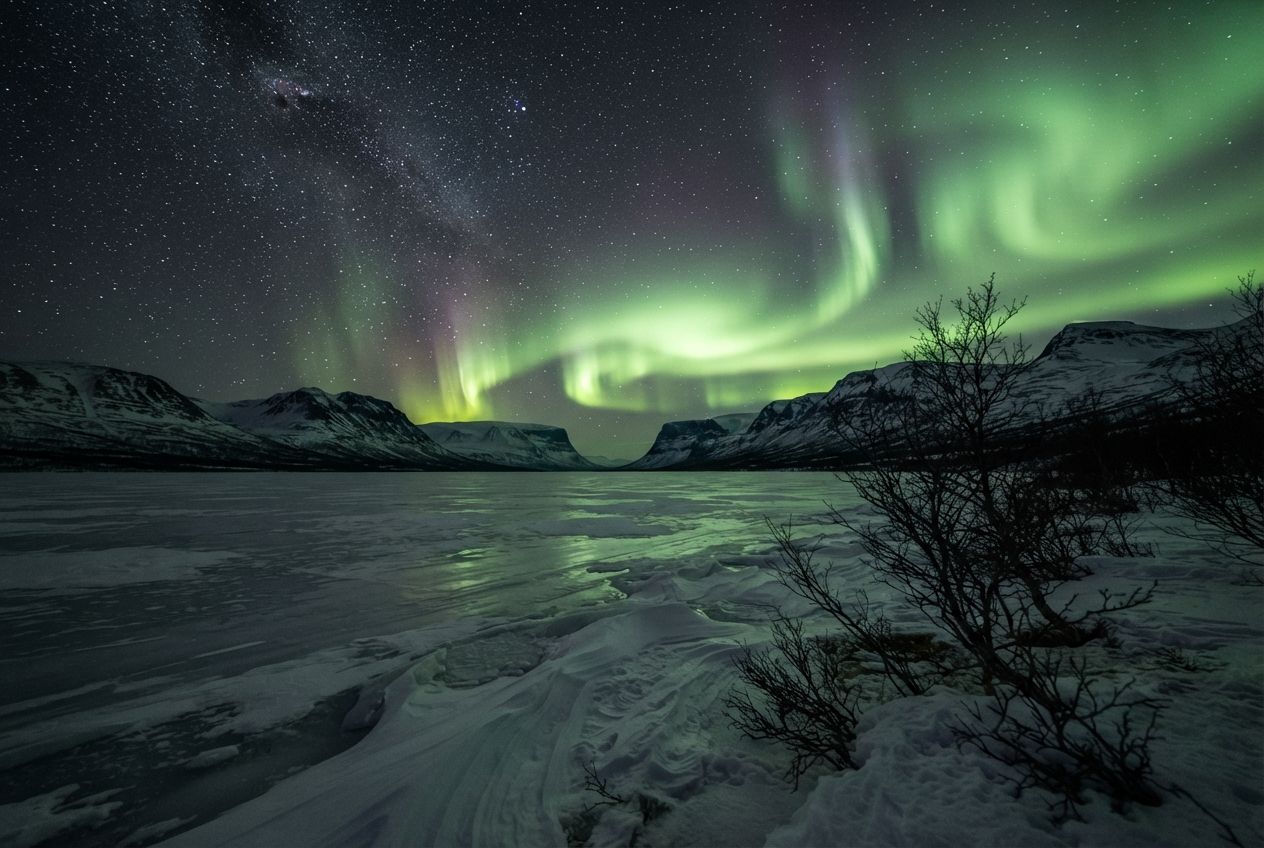
Abisko is a village beside a national park, so the dark starts at the door. Its mid-winter sky is one of the better European ones in our data, though well short of the usual claims.
- Best sky: January
- 77% of 5-night stays
- Overhead from Kp 2
- -13 °C on January nights
Most reviewed tour in Abisko
Minibus tour
Abisko Northern Lights Tour
If no aurora shows: the listing does not say. Ask before booking.
from €88
See dates and price
Links go to Civitatis. Scores are Civitatis customer ratings. Check the listing for the current price and conditions.
Abisko: aurora fact sheet
Best month for the sky
January
77% of 5-night stays had at least one usable night. Number 5 of 12 places that month.
Visible from town?
Yes: it is a village beside a national park, with darkness at the doorstep
Getting there
Fly to Kiruna, then about 1 h by train or a private transfer; the bus skips Oct-Jan (KRN)
Cost level
Tours from EUR 88.03; Aurora Sky Station night visit from 1,295 SEK
Best for
People who want the aurora as the whole trip and do not need a town
- Geomagnetic latitude
- 65.3°
- Kp for overhead aurora
- Kp 2
- Coordinates
- 68.35° N, 18.83° E
What works here
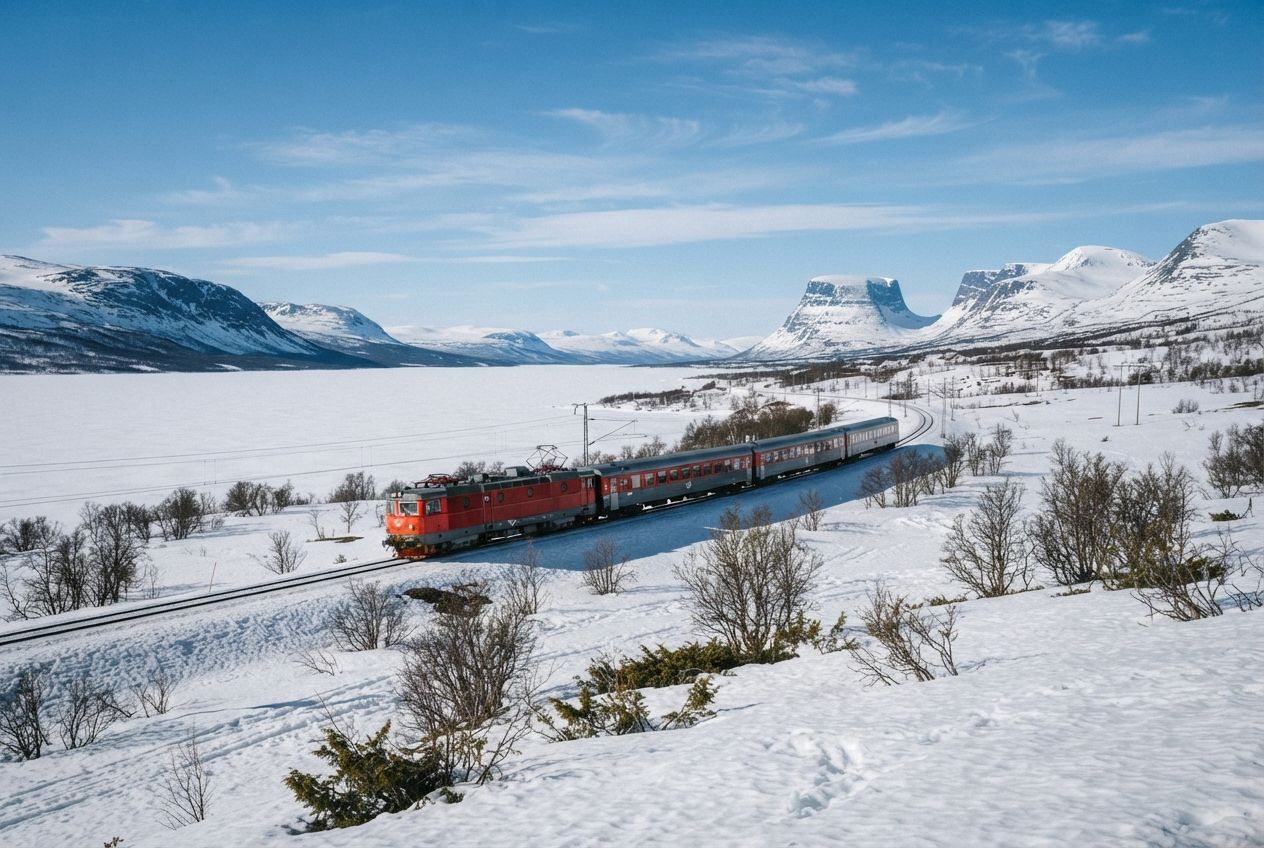
- A village beside a national park with its own train stop: dark sky at the door, no car needed
- Good position: geomagnetic latitude about 65.3 degrees, aurora overhead typically from Kp 2
- 77% of five-night January stays had a usable night, second among our nine European places
What to weigh
- Slow to reach: 90 to 100 km from Kiruna airport, and public bus 91 does not run from October to January
- Little to do by day outside mid-February to April, and the Sky Station takes 40 people a night
- The blue hole claim has no published data: 35% of January nights had a usable sky in ours, not 65%
The night sky in Abisko, month by month
How dark it gets, how often the cloud opens and what that meant for stays of three, five and seven nights.
- 19%52%Sep7 h2 °C
- 19%54%Oct11 h-4 °C
- 26%68%Nov15 h-8 °C
- 28%71%Dec17 h-11 °C
- 35%77%Jan16 h-13 °C
- 32%75%Feb13 h-12 °C
- 28%69%Mar9 h-11 °C
- too brightApr3 h·
- Nights with a usable sky
- At least one in 5 nights
- Dark hours per night
- Night temperature
Abisko against the others in January
See the full table
| Month | Dark hours per night | Nights with a usable sky | At least one in 3 nights | At least one in 5 nights | At least one in 7 nights | Night temperature |
|---|---|---|---|---|---|---|
| September | 7.3 h | 38% | 52% | 65% | 2 °C | |
| October | 11.3 h | 40% | 54% | 66% | -4 °C | |
| November | 14.8 h | 51% | 68% | 79% | -8 °C | |
| December | 16.7 h | 55% | 71% | 81% | -11 °C | |
| January | 15.7 h | 61% | 77% | 87% | -13 °C | |
| February | 12.5 h | 58% | 75% | 85% | -12 °C | |
| March | 8.8 h | 54% | 69% | 79% | -11 °C | |
| April | 2.9 h | Not dark enough for aurora | ||||
A usable sky means at least two dark hours in a row with half the sky or more free of cloud, over an area of about 110 km. It says nothing about solar activity, so it is not the chance of seeing the aurora. How we calculate this
By day in Abisko
The nights are long, but the aurora fills a few hours at most. What people do with the rest.
- 1
Ice climbing from STF Abisko Turiststation
Guided, no experience needed, 10:00 to about 13:00, from SEK 995. Minimum age 12. Season 13 November 2026 to 27 March 2027.
- 2
Nuolja chairlift by day
Open two-seat chairlift to the Sky Station café, up to 30 minutes each way, from SEK 260. Daytime operation is listed from 13 February to 27 April.
- 3
Naturum Abisko
National park visitor centre about 800 m from the tourist station. Listed hours: 17 February to 30 April, Tuesday, Thursday and Saturday, 13:00 to 17:00.
- 4
Sámi and reindeer day trip to Jukkasjärvi
Full-day trip from Abisko to a reindeer corral, starting at 09:15, SEK 1,395 per person. Listed season 2 December to 26 March.
What our sky numbers say about Abisko
A usable sky, as we count it, is a night with at least two dark hours in a row and half the sky or more free of cloud, averaged over a satellite cell about 110 km across.
Abisko's season has two halves. September and October are poor: 52% and 54% of five-night stays had at least one usable night, close to Tromsø's figures and, in September, the lowest of the twelve. From November it improves, and January is the peak. 35% of January nights were usable and 77% of five-night stays had at least one. February is close at 75%. Among our nine European places only Kiruna ranks higher in January, and only Kiruna and Saariselkä in February. Kiruna, about 90 to 100 km away and the town whose airport you fly into, has the higher five-night figure in every month, by 3 points in January and 18 in March. March falls back to 69%, and April is too bright to count.
Three January nights gave a usable night in 61% of stays, five in 77%, seven in 87%. We would book five. The nights page has the rest.
A second dataset we used as a cross-check puts Abisko lower than our figures. And they describe the sky only. Solar activity is separate, though the position is good: about 65.3 degrees geomagnetic latitude, with aurora typically overhead from Kp 2 or lower.
Seeing the aurora from the village
This is Abisko's real advantage. It is a village beside a national park, and you do not need to travel to find darkness. We have no light-pollution measurement to quote.
The known viewpoint is the Aurora Sky Station on Mount Nuolja, at around 900 m. A chairlift takes 20 to 40 minutes, there are 40 places a night, and it is reached on foot from STF Abisko Turiststation, which has its own train stop. Night visits for 2026/27 run from 19 October 2026 to 27 March 2027.
Getting there
The nearest airport is Kiruna, about 90 to 100 km away. SAS and Norwegian fly from Stockholm Arlanda all year, in about 90 minutes. Winter directs for 2026/27 are Copenhagen (SAS, 17 December 2026 to 7 March 2027) and Düsseldorf (Eurowings, Saturdays, 6 February to 20 March 2027). We found no direct flight from London.
The last leg needs planning. Public bus line 91 runs only February to May and June to September, so not from October to January, and it does not wait for late flights. The alternatives are a private transfer, or the airport coach into Kiruna and then a train of about one hour to Abisko Östra. We could not confirm prices for the bus or the transfers (checked 4 October 2026), so ask for a quote before booking flights.
What it costs
An aggregator shows STF Abisko Turiststation from about USD 90, and we could not confirm a winter double-room rate.
The Aurora Sky Station night visit is from 1,295 SEK, including guide, chairlift and warm clothing. The listed minibus tour starts from EUR 88.03 per person for 3.5 hours, with a 9.3 score from only 3 reviews. The photo tour, capped at 8 people, is from EUR 141.12 and has no reviews yet (checked 4 October 2026).
Tour or on your own
On your own, most nights. Put on every layer you have (the mean January minimum is about -13 C) and walk out.
We would pay for one extra at most. The photo tour offers a return visit on another day if nothing appears, with no refund. The minibus tour states no policy. The Sky Station is a fixed site on a mountain, so if cloud sits on Nuolja you have paid for a chairlift ride. More in what happens when the aurora does not show.
The blue hole, checked
The Swedish Tourist Association says Abisko is known for the so-called "blue hole", a local effect that often brings clear sky when the surrounding area is cloudy. Its page cites no data. Figures such as 65% to 70% clear nights in mid-winter circulate on travel sites with no dataset behind them.
What is documented: Abisko lies in a rain shadow and is one of the driest places in Sweden. The same source calls it a very cloudy village by Swedish standards. Dry is not the same as clear.
Our numbers sit in between. Abisko's January figure of 35% usable nights beats Tromsø's 21%, so an advantage over the coast is there. It is not 65%. One limit on our side: a 110 km cell cannot resolve a gap in the cloud a few kilometres wide. For a fair comparison, see the best place by the numbers.
More northern lights tours in Abisko
Photo tour
Northern Lights Photo Tour
If no aurora shows: second attempt offered.
In the event that they do not appear, we will give you the chance to return on another day to experience them, but please note that refunds are not available.
from €141
See dates and price
Common questions
Is the Abisko blue hole real?
It is a claim without published data. The Swedish Tourist Association describes a local weather effect that often brings clear skies, and cites no study. In our data Abisko beats the Norwegian coast in mid-winter, but only 35% of January nights had a usable sky.
What is the best month to see the northern lights in Abisko?
January in our 2001-2024 sky data: 77% of five-night stays had at least one dark night with a usable sky, and February is close at 75%. September and October are the weakest months, at 52% and 54%.
How do you get to Abisko without a car?
Fly to Kiruna, take the airport coach into Kiruna and then the train, which takes about an hour to Abisko Östra. The public bus on line 91 runs only February to May and June to September.
Do I need a tour in Abisko?
Less than anywhere else on this site, because you can step outside into the dark. A tour or the Aurora Sky Station is an extra, and neither can move you out from under cloud by much.