When to see the northern lights, month by month
Three things must line up: darkness, a gap in the cloud and an active sun. Our figures cover the first two, month by month, for twelve places.
- September to April
- 12 places compared
Three things have to line up
The month you pick controls the first, shifts the odds of the second and does nothing for the third.
Darkness
From late April to mid August the Arctic sky never gets dark enough. Midwinter gives up to 17 dark hours a night.
A gap in the cloud
This is what our tables measure: how often a place had two dark hours in a row with half the sky open.
Solar activity
Forecast a few days ahead at best. Places closer to the auroral zone need less of it.
Month by month
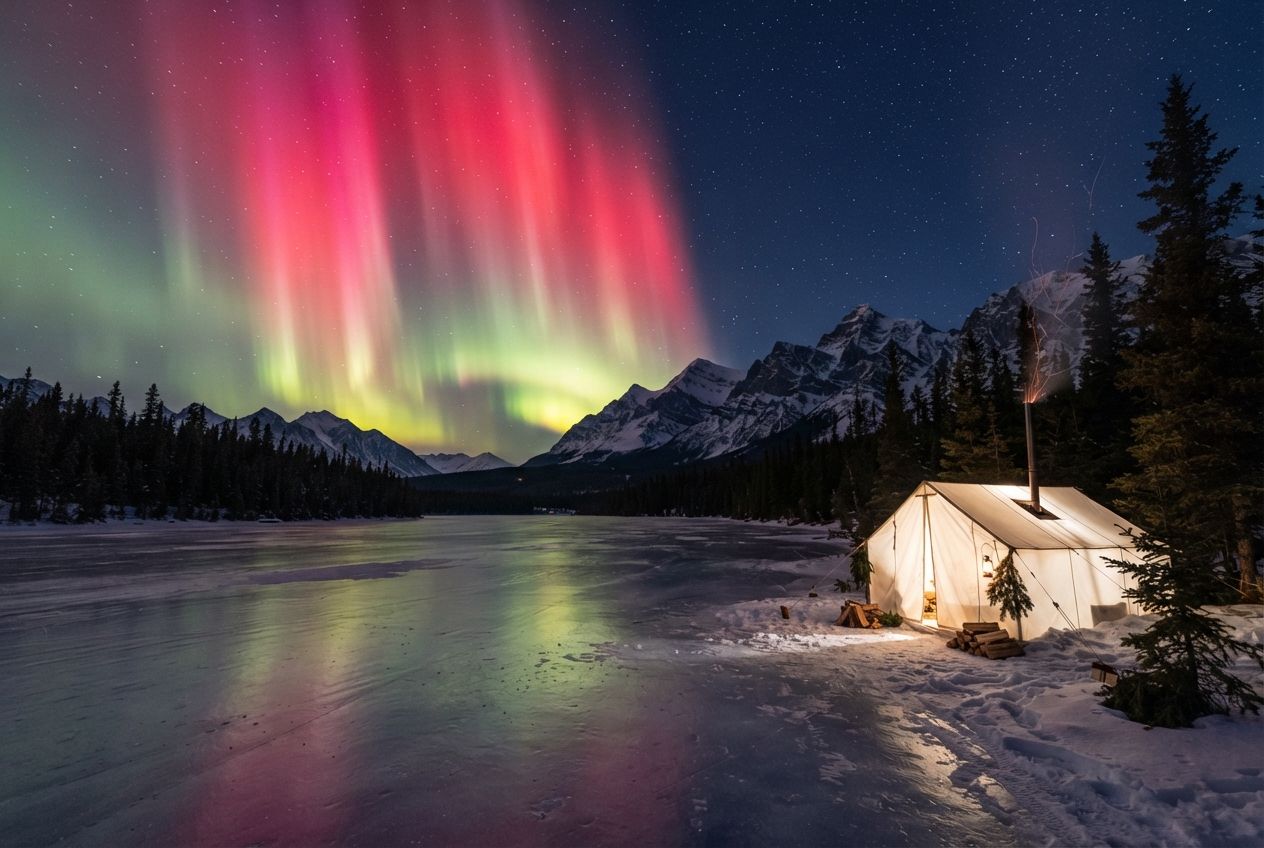
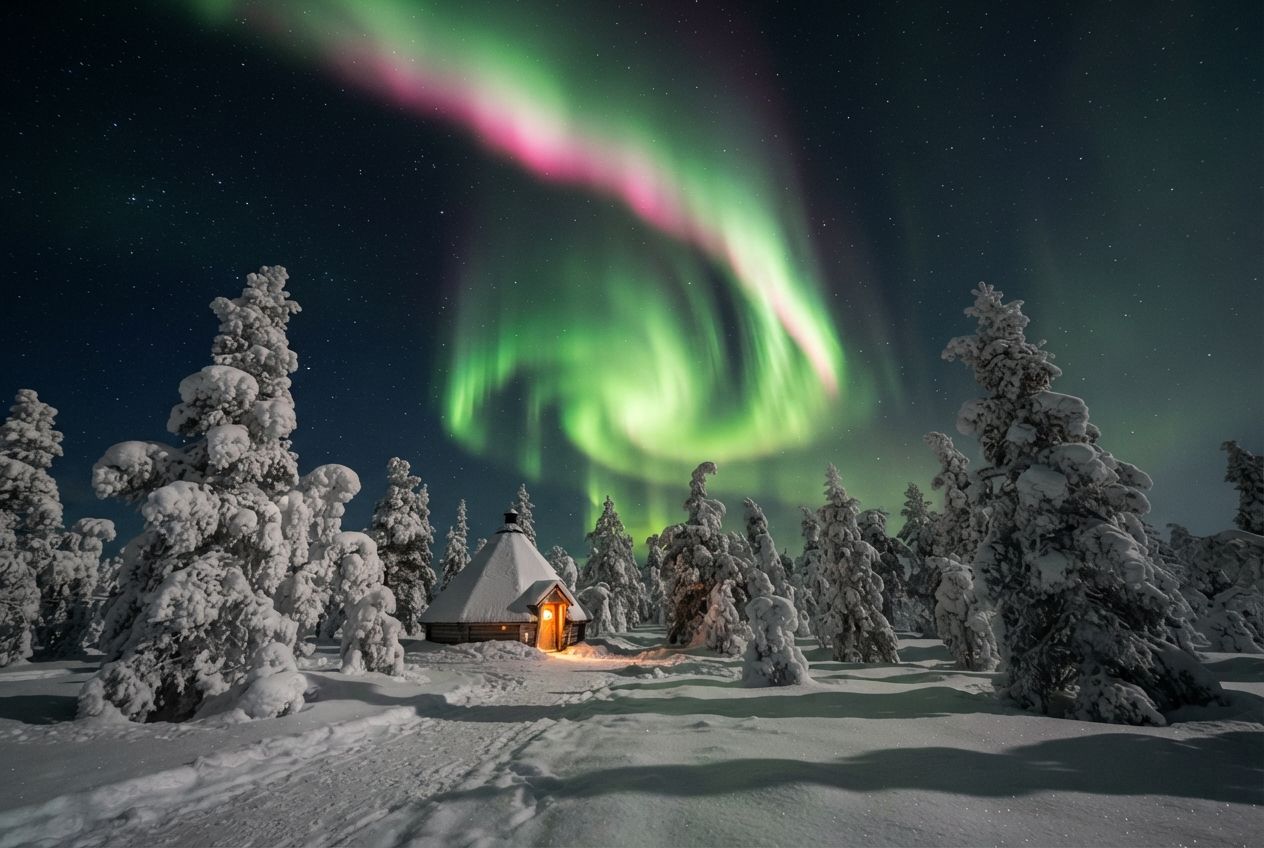
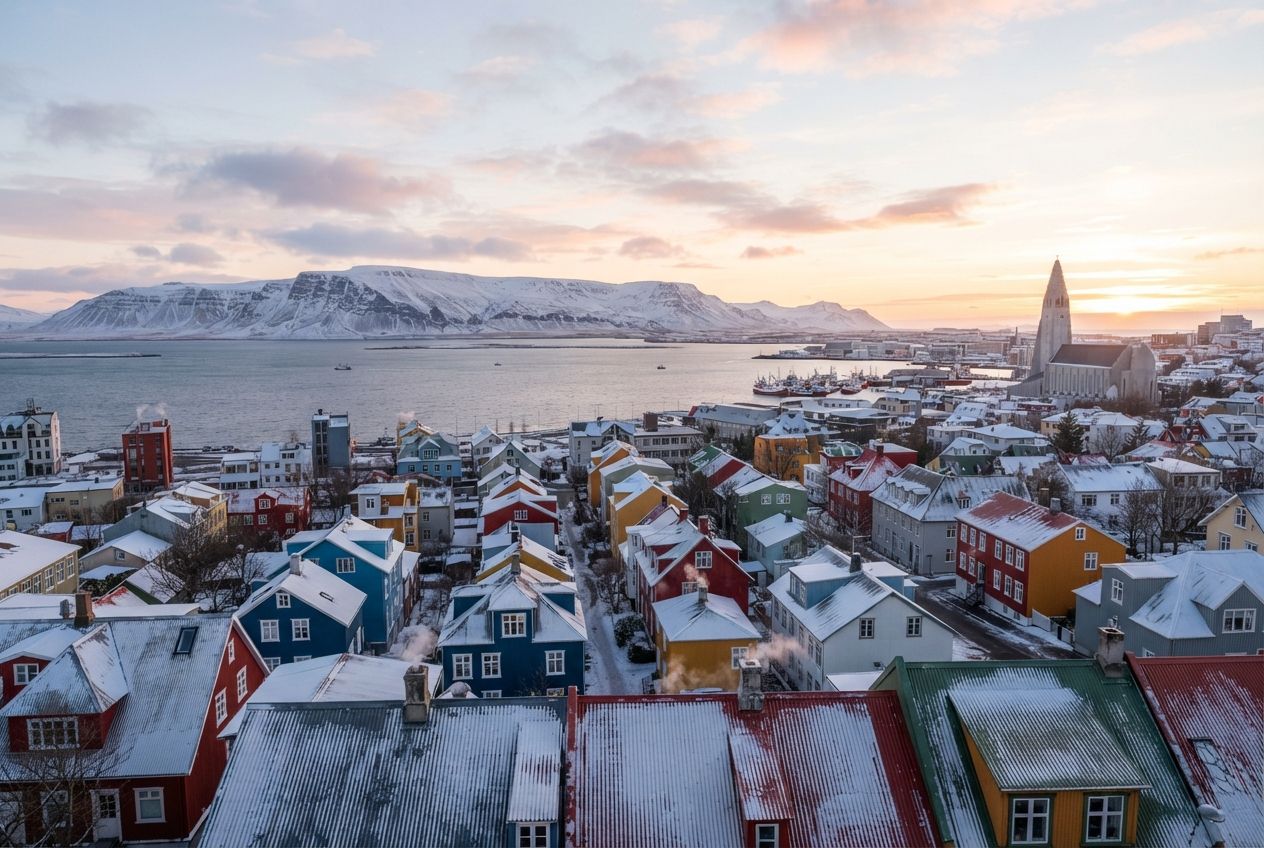
Usable nights by place and month
Share of nights with a usable sky, with the hours of darkness underneath.
| Destination | Sep | Oct | Nov | Dec | Jan | Feb | Mar | Apr |
|---|---|---|---|---|---|---|---|---|
| Tromsø | 20%7 h | 17%11 h | 18%15 h | 17%17 h | 21%16 h | 19%13 h | 9%9 h | - |
| Reykjavík | 24%8 h | 26%11 h | 29%14 h | 34%16 h | 26%15 h | 26%12 h | 23%9 h | 14%5 h |
| Rovaniemi | 35%8 h | 25%11 h | 26%15 h | 29%16 h | 29%15 h | 30%12 h | 35%9 h | - |
| Abisko | 19%7 h | 19%11 h | 26%15 h | 28%17 h | 35%16 h | 32%13 h | 28%9 h | - |
| Kiruna | 36%7 h | 31%11 h | 30%15 h | 29%17 h | 34%16 h | 36%13 h | 40%9 h | - |
| Levi | 33%7 h | 21%11 h | 24%15 h | 21%17 h | 26%16 h | 27%13 h | 28%9 h | - |
| Saariselkä | 29%7 h | 23%11 h | 25%15 h | 26%17 h | 31%16 h | 30%13 h | 33%9 h | - |
| Akureyri | 17%8 h | 16%11 h | 16%14 h | 20%16 h | 15%15 h | 16%12 h | 10%9 h | - |
| Luleå | 37%8 h | 35%11 h | 30%14 h | 28%16 h | 24%15 h | 23%12 h | 13%9 h | - |
| Fairbanks | 31%8 h | 28%11 h | 46%14 h | 57%16 h | 61%15 h | 55%12 h | 58%9 h | 49%5 h |
| Yellowknife | 48%8 h | 32%11 h | 35%14 h | 61%15 h | 65%15 h | 72%12 h | 66%10 h | 40%6 h |
| Whitehorse | 36%9 h | 33%11 h | 39%14 h | 47%15 h | 48%14 h | 55%12 h | 55%10 h | 46%6 h |
A usable sky means at least two dark hours in a row with half the sky or more free of cloud, over an area of about 110 km. It says nothing about solar activity, so it is not the chance of seeing the aurora. How we calculate this
Three conditions, and which ones we measure
You need darkness, a gap in the cloud and some solar activity at the same time. Our statistics cover the first two. A usable night means at least two dark hours in a row with half the sky or more free of cloud, averaged over a satellite cell about 110 km across, using NASA POWER data for 2001 to 2024. Solar activity is separate, and no month can promise a display.
The season
The tourist boards give similar windows. Visit Tromsø and Visit Rovaniemi say late August to early April. Explore Fairbanks says roughly 21 August to 21 April, Visit Reykjavík says early September to the end of April, and Destination Canada says mid-August to mid-April for Yellowknife. The Swedish Tourist Association says late August to April for Abisko, best from mid-November to mid-March. For the newer places on our list, Travel Yukon says mid-August to early April for Whitehorse, Visit Levi says August to the end of April, Visit Luleå says late August to the first days of April, and Kiruna Lapland says September to March.
The further north a place is, the sooner it runs out of night. In April only Whitehorse, Fairbanks, Yellowknife and Reykjavík are still dark enough in our data. Start with September and work through to April, or see the ranking for any month on where to go.
Midwinter has the most darkness, not always the best sky
Tromsø has 17.1 dark hours in December, more than any other place, and only 50% of five-night stays that month had a usable night. Rovaniemi has fewer hours in March (9.1) and does better, at 82%. Fairbanks peaks in January at 97%, Yellowknife in February at 98%. The best month depends on the place, which is why our month pages rank all twelve each time.
Two of the newer places show it well. Luleå is strong in autumn (84% in September, 83% in October) and weak in March (37%). Kiruna runs the other way, from 73% in November to 87% in March, and is the strongest Nordic sky in our data from January to March.
The equinox effect
Geomagnetic activity tends to run higher around the March and September equinoxes (the Russell-McPherron effect). The UAF Geophysical Institute says the likelihood over Interior Alaska is roughly twice as high at the equinox as at the solstice. The Finnish Meteorological Institute says only slightly higher. NOAA names the equinoxes the best seasons. The size is not agreed, and it is a tendency in activity, not in cloud or darkness.
What time of night
Plan to be out late, not at dusk. UAF says 9 pm to 3 am is typically the higher-probability window for Fairbanks. NOAA says within an hour or two of midnight, between 10 pm and 2 am local time. See tonight's forecast for the dark window now.
The solar cycle and the moon
Solar Cycle 25 peaked in October 2024, with a smoothed sunspot number of 161. NOAA's predicted figure for October 2026 to January 2027 is about 88, roughly half the peak: a declining phase, far from minimum. That should mean fewer flare-driven storms than 2024, though NOAA's own wording on that is not confirmed here. See the Kp guide for how activity is measured.
A full moon dims the apparent brightness of the aurora, and UAF adds that it may enhance colours. It matters for faint displays, and ranks well behind cloud, darkness and activity.
Common questions
When is the best time to see the northern lights?
By our sky figures, December to March in Fairbanks, Yellowknife and Whitehorse: 92% to 98% of five-night stays then had at least one usable night. In Europe it varies by place, from Kiruna in March (87%) to Reykjavík in December (76%) and Tromsø in January (57%).
What time of night should you look?
Late. The UAF Geophysical Institute gives 9 pm to 3 am for Fairbanks, NOAA says within an hour or two of midnight, and the Finnish Meteorological Institute says midnight and a couple of hours either side.
Are the equinox months September and March better?
Solar activity tends to run higher around the equinoxes, but the size of the effect is not agreed and it says nothing about cloud. In our sky figures March is the best month for Rovaniemi but the weakest for Tromsø, while Yellowknife and Fairbanks are best in midwinter.
Do you need to go at solar maximum?
No. The Finnish Meteorological Institute says that in Lapland auroras are quite common always, even during solar minimum. The cycle matters less for places in the auroral zone.