Fairbanks or Yellowknife for the northern lights
These two have the best mid-winter skies of our twelve and are nearly tied. The differences are September, November, the cold and how you get around.
Tours in each place
Fairbanks
Day trip with aurora stop
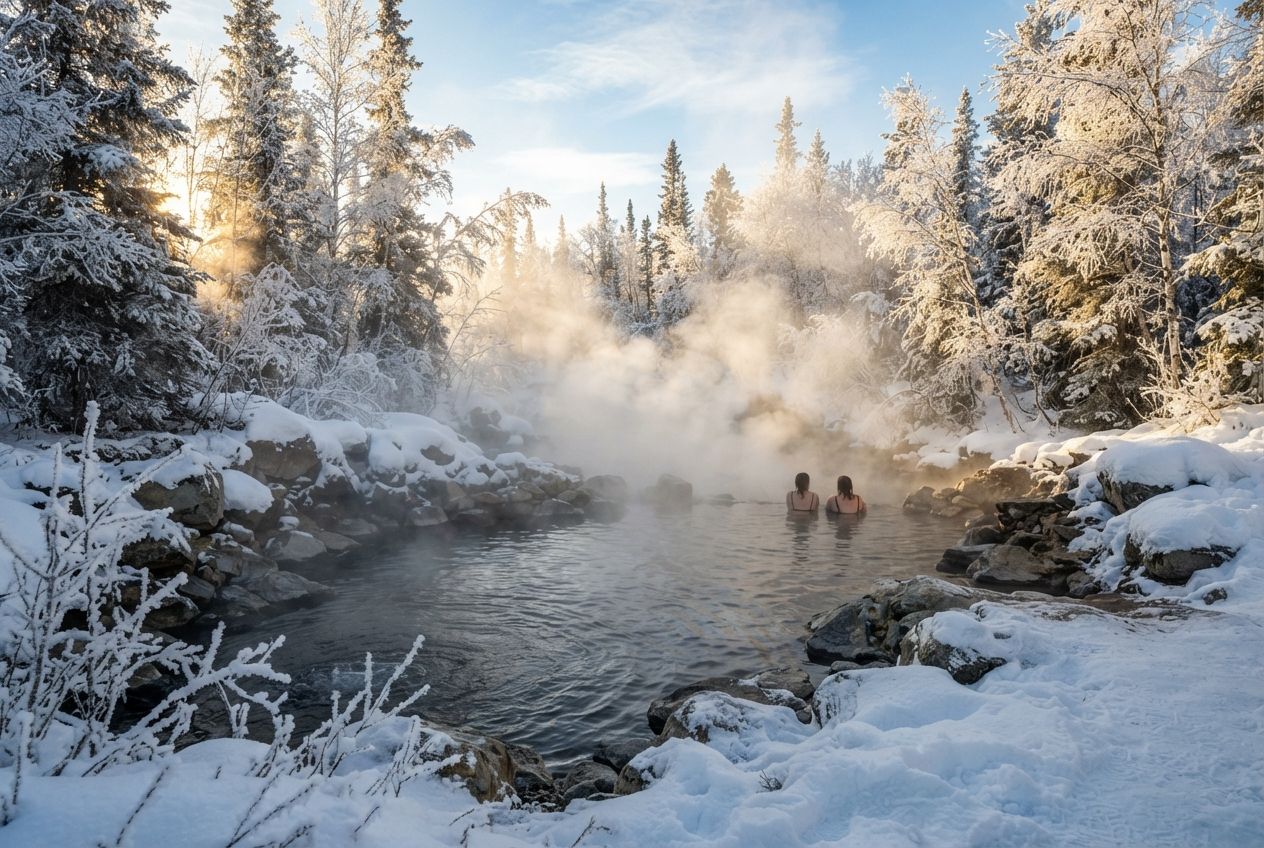
Chena Hot Springs & Northern Lights Tour
If no aurora shows: the listing does not say. Ask before booking.
from €244
See dates and price
Links go to Civitatis. Scores are Civitatis customer ratings. Check the listing for the current price and conditions.
Yellowknife
Minibus tour
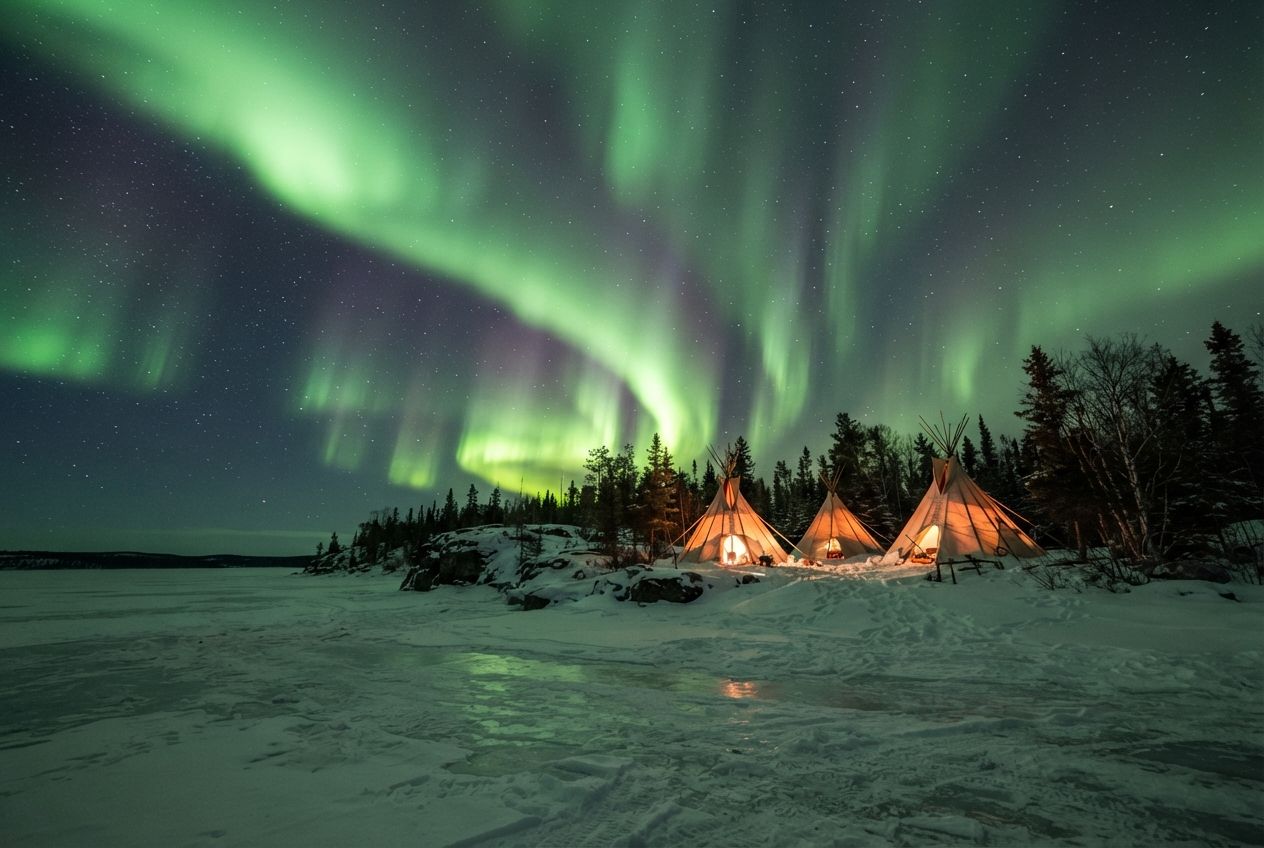
Northern Lights Trip
If no aurora shows: the listing does not say. Ask before booking.
from €75
See dates and price
Links go to Civitatis. Scores are Civitatis customer ratings. Check the listing for the current price and conditions.
Side by side
| FairbanksAlaska, USA | YellowknifeCanada | |
|---|---|---|
| Geomagnetic latitude | 64.9° | 68.8° |
| Kp for overhead aurora | Kp 2 | Kp 1 |
| Usable sky in 5 nights, September | 79% | 94% |
| Usable sky in 5 nights, October | 74% | 76% |
| Usable sky in 5 nights, November | 88% | 79% |
| Usable sky in 5 nights, December | 96% | 95% |
| Usable sky in 5 nights, January | 97% | 97% |
| Usable sky in 5 nights, February | 95% | 98% |
| Usable sky in 5 nights, March | 92% | 95% |
| Usable sky in 5 nights, April | 84% | 80% |
| Night temperature, January | -20 °C | -30 °C |
| Visible from town? | Barely: Creamer's Field is 2 miles (3 km) from downtown; good sites are 27-40 km out | Yes on good nights: Pilots Monument is about a 15-minute walk from downtown |
| Getting there | Year-round nonstops from Seattle; from Europe typically via Seattle or Anchorage (FAI) | Flights from Edmonton, Calgary and Vancouver; no international directs found (YZF) |
| Cost level | Hotels about USD 100-180 a night in winter; listed tours from EUR 177.66 | Hotels about CAD 140-200 a night in winter; the listed tour is from EUR 74.82 |
| Cheapest listed aurora tour | €178 | €75 |
A usable sky means at least two dark hours in a row with half the sky or more free of cloud, over an area of about 110 km. It says nothing about solar activity, so it is not the chance of seeing the aurora. How we calculate this
Which one to pick
Fairbanks
Pick it if you are going in November or April, want to rent a car and drive to hilltop sites, or can use the nonstop flights from Seattle.
Yellowknife
Pick it if you are going in September or February, want to watch on foot from town, and can handle the deepest cold of the twelve.
The sky, side by side
Our measure is the usable sky: a night with at least two dark hours in a row and half the sky or more free of cloud, averaged over a cell about 110 km across. It covers cloud and darkness. Solar activity is separate.
In mid-winter there is almost nothing between them. In January 97% of five-night stays in both places had at least one usable night. December is 96% for Fairbanks and 95% for Yellowknife. February is 95% and 98%.
Look at single nights and Yellowknife pulls ahead in late winter: 72% of February nights were usable there, against 55% in Fairbanks. That matters on a short stay.
The shoulder months split them. September belongs to Yellowknife, 94% against 79%. November belongs to Fairbanks, 88% against 79%, because Yellowknife has a cloudy spell from October into November. October is weak in both, at 76% and 74%. In April Fairbanks leads, 84% against 80%.
Position under the oval
Yellowknife has the edge. Its geomagnetic latitude is about 68.8 degrees, the highest of our twelve and under or just poleward of the average oval, with aurora typically overhead from Kp 1. Fairbanks is at about 64.9 degrees and typically needs Kp 2.
In practice both are well placed, and low activity is usually enough at either. The Kp guide explains the scale.
Cold, access and cost
Both are severe. Fairbanks has a mean January minimum of about -27.3 C and Yellowknife about -29.4 C. During dark hours, our January means are -20 C and -30 C. September in Yellowknife averages about 6 C at night, which is one more argument for that month.
Fairbanks has year-round nonstop flights from Seattle. Yellowknife is served from Edmonton, Calgary and Vancouver, and we found no international directs. From Europe, both typically mean a connection in North America.
Winter hotel examples run about USD 100-180 a night in Fairbanks and about CAD 140-200 in Yellowknife.
The bigger difference is on the ground. In Yellowknife you can walk from downtown to Pilots Monument in about 15 minutes. In Fairbanks the only named site near town is Creamer's Field, and the hilltop sites are 20 to 25 miles (32 to 40 km) out, with four-wheel drive advised in winter.
Tours and blank nights
Fairbanks has three listed tours, from EUR 177.66 for a five-hour lodge evening to EUR 322.46 for a 15-hour Arctic Circle trip. Yellowknife has one, a four-hour minibus trip from EUR 74.82 (all checked 4 October 2026).
None of the four says what happens if no aurora shows. With skies like these that is a smaller risk than in Europe, but ask before you pay. Is a tour worth it covers the questions.
The claims
Both tourist boards quote big numbers: more than 90 percent in three nights for Fairbanks, and 98% over three nights plus up to 240 active nights a year for the Northwest Territories. Neither publishes data. Our three-night sky figures peak at 89% in Fairbanks (January) and 94% in Yellowknife (February), before solar activity is counted.
Which one we would pick
For September, Yellowknife, without hesitation: a usable sky in 94% of five-night stays, at mild temperatures.
For November or April, Fairbanks.
From December to March, choose on logistics. If you want to drive yourself to a hilltop and fly via Seattle, Fairbanks. If you would rather walk out from a hotel and want the higher share of clear single nights, Yellowknife. There is a third option: Whitehorse is close behind both on sky, with 93% to 96% of five-night stays from December to March, and it is milder. Its geomagnetic latitude is lower, about 63.5 degrees, so aurora overhead typically needs Kp 3. The full ranking is on the best place by the numbers.
More tours in each place
Fairbanks
Viewing lodge
Fairbanks Aurora Viewing Lodge Experience
If no aurora shows: the listing does not say. Ask before booking.
from €178
See dates and priceDay trip with aurora stop
Arctic Circle & Northern Lights Tour
If no aurora shows: the listing does not say. Ask before booking.
from €322
See dates and price
Common questions
Is Fairbanks or Yellowknife better for the northern lights?
From December to March they are nearly equal: 92% to 98% of five-night stays in both had at least one dark night with a usable sky in our 2001-2024 data. Yellowknife is clearly better in September, Fairbanks in November.
Which is colder, Fairbanks or Yellowknife?
Yellowknife. Its mean daily minimum is about -29.4 C in January against about -27.3 C in Fairbanks, and during dark hours our data shows a mean of -30 C against -20 C.
Which is closer to the auroral oval?
Yellowknife, at about 68.8 degrees geomagnetic latitude, with aurora typically overhead from Kp 1. Fairbanks is at about 64.9 degrees and typically needs Kp 2. Both figures are third-party estimates.
Do I need a car in Fairbanks or Yellowknife?
In Fairbanks, yes, or a tour: the named viewing sites other than Creamer's Field are 17 to 25 miles (27 to 40 km) out. In Yellowknife you can walk to Pilots Monument from downtown in about 15 minutes.